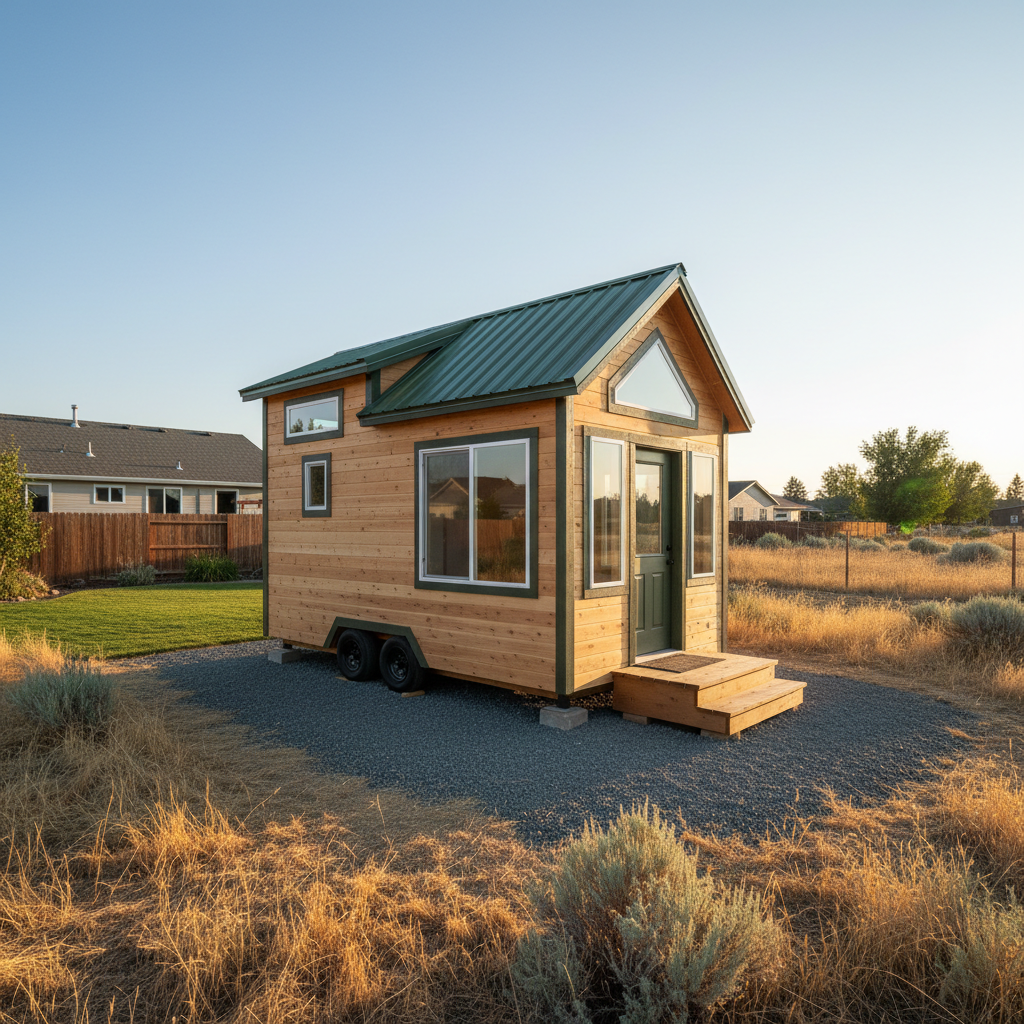
Building or placing a small dwelling around Grant County requires careful attention to local regulations. People often start a compact housing project only to face strict rules from the city or county. Many buyers focus entirely on the minimalist aesthetic and skip the necessary groundwork. This can lead to owning an expensive structure that cannot legally connect to utilities or support year-round occupancy in the local climate.
Building or placing a small dwelling around Moses Lake, WA is not just about buying a design online and dropping it onto a parcel. Property owners must navigate specific local building codes, intense summer heat, and freezing winter winds coming straight off the Columbia basin. To avoid serious financial mistakes and legal trouble, property owners must understand these common traps.
Ignoring Local Zoning and Setback Realities
The single biggest mistake people make is assuming that owning land in Moses Lake allows them to put any size structure on the property. Local zoning codes are strict about permanent versus temporary setups, accessory dwelling units, and minimum square footage requirements for primary residences.
- Failing to check the Moses Lake municipal code or Grant County regulations before purchasing materials.
- Assuming tiny homes on wheels share the same legal pathway as foundation-built structures under Appendix Q.
- Forgetting about property setbacks and utility easements that reduce usable yard space in Moses Lake, WA.
Property owners must always talk to the local planning department first. Taking shortcuts here usually results in expensive stop-work orders or forced relocations of the structure.
Underestimating the Eastern Washington Climate
Many pre-packaged plans or budget builders use standard insulation packages designed for milder climates. That approach does not work in this region. Moses Lake experiences deep freezes in January and scorching, dry heat all through July and August. If climate control and insulation are not specified correctly for local weather swings, energy bills will spike, and moisture will enter the walls.
Moses Lake Custom Sheds talks to property owners frequently who tried to convert a cheap storage structure into a living space without upgrading the thermal envelope. They end up dealing with condensation issues, warped framing, and a space that feels like an oven in the summer. Spending extra money on closed-cell spray foam and proper vapor barriers from day one is essential for any Shed Builder project in Moses Lake.
Skipping Proper Foundation and Drainage Planning
Local soil conditions vary, presenting plenty of sandy loam and rocky spots depending on proximity to the lake or the surrounding scablands. Pouring a quick concrete slab or setting piers without proper grading is a recipe for shifting foundations.
Water management matters even in a semi-arid climate. When Moses Lake, WA gets sudden spring downpours or heavy winter snowmelt, poorly graded ground will pool right against the base plates. Property owners must always invest in a solid site prep plan. Clear the organic topsoil, compact the base correctly, and keep floor joists well clear of ground contact to prevent premature rot.
Falling for Out-of-State Builder Gimmicks
Internet marketing features many slick companies selling prefabricated units shipped on flatbeds from across the country. They show gorgeous photos of finished interiors, but they rarely understand local building standards or Washington State L&I certification rules. If an out-of-state builder does not provide certified plans that pass state inspections, property owners will struggle to get sign-offs from local inspectors in Moses Lake.
Keep the project realistic, check permits twice, and work with a trusted Shed Builder who knows the local terrain. A little patience upfront saves thousands of dollars in teardown and redesign costs later. Moses Lake Custom Sheds provides Shed Builder services for homes and businesses in Moses Lake.