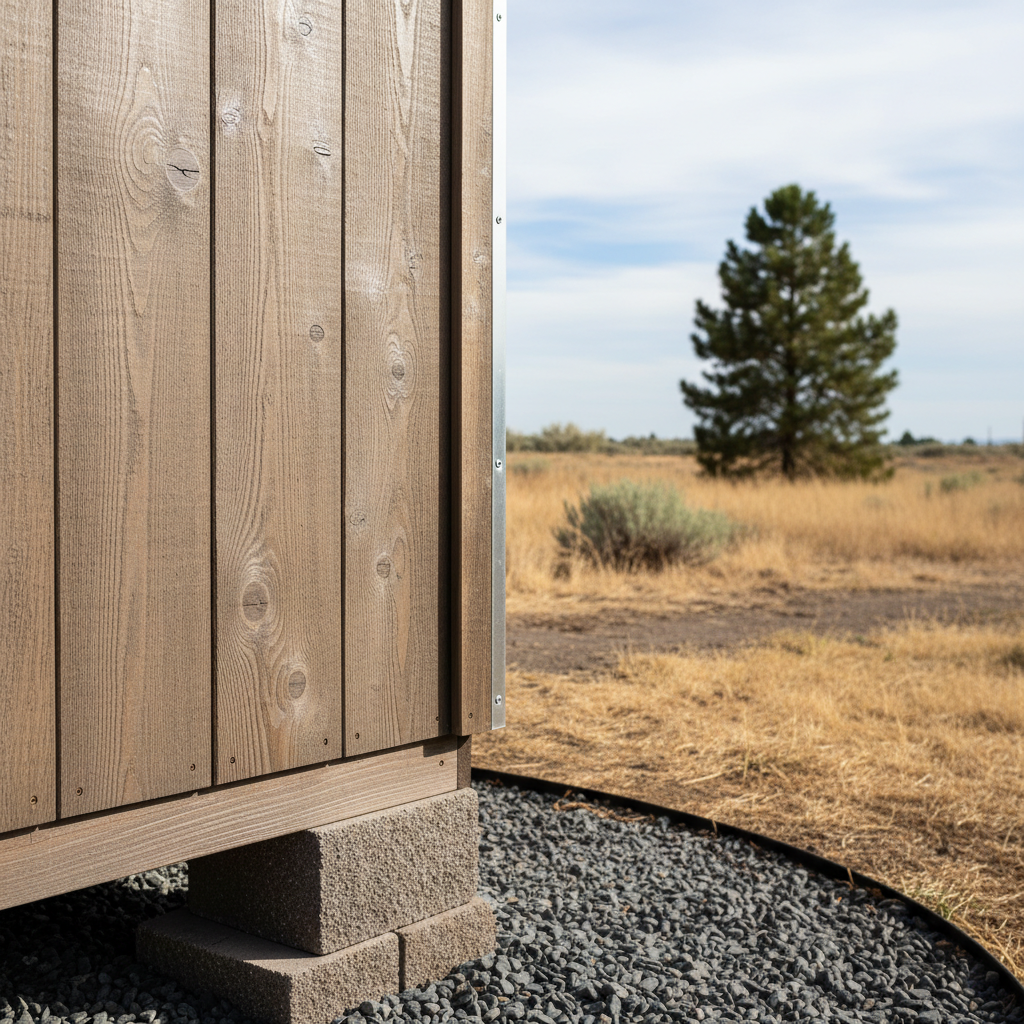
Alright, let us talk about tiny homes. We have been building here in Moses Lake for a good while. Our team gets a lot of questions about these smaller dwellings. It is not just a trend for many people. It is a real solution for housing as well as a way to simplify as well as a smart investment. There is a lot of misinformation out there. This is especially true when you start digging into local rules. So, we will lay out the straight facts on what you need to know if you are considering a tiny home here in Moses Lake.
What is the difference between a tiny home and an ADU in Moses Lake?
This is probably the first thing that trips people up. An Accessory Dwelling Unit, or ADU, is a secondary living space on the same property as a primary residence. It can be attached to your main house. This could be a converted basement or a garage. It can also be a detached structure in your backyard. The big thing with ADUs is that they are built to the same residential standards as a regular home. They are permanently tied to that main property.
A tiny home is generally defined as a dwelling under 400 square feet. These can be built on a permanent foundation or on wheels. Here in Moses Lake, the city has actually updated its municipal code. This update specifically allows micro (tiny) homes to be used as ADUs. So, not all ADUs are tiny homes. However, a tiny home can be an ADU if it meets the city's requirements. This is a pretty progressive move for our Moses Lake area. It aims to help with housing options.
Can I put a tiny home on my property in Moses Lake? What are the zoning rules?
Yes, you generally can put a tiny home on your property in Moses Lake. It is not a free-for-all. The key here is usually whether it is classified as an ADU. Moses Lake's updated ADU code allows for tiny homes to be used as ADUs. For properties within the urban growth boundary, you can have up to two ADUs. These can be both attached, both detached, or one of each. Outside that boundary, it is one attached and one separate structure, or just one separate building.
The city has made it easier. They process ADU permit applications administratively. You will need one off-street parking space for each ADU. The city has also removed some old restrictions. These include the requirement for ADU residents to be related to the property owner. They also removed the requirement of having to tear down the ADU if they moved out. The goal is to increase affordable housing. For this reason, short-term rentals of ADUs are prohibited in Moses Lake.
If your tiny home is on wheels, it gets a bit trickier. In Washington State, a tiny home on wheels with a chassis is often called a park model recreational vehicle (PMRV). This is usually approved only for temporary or recreational use. If you take the wheels off and put it on a foundation, it might still be considered temporary use by the state. This is unless it is specifically built to the Washington State Building Code and local ADU requirements. Always check with the City of Moses Lake's Community Development Department before you do anything with your tiny home.
What kind of foundation does a tiny home need in Moses Lake?
If your tiny home is going to be a permanent structure, it needs a proper foundation. This is especially true if it is an ADU. This is just like any other house. This is not just about stability. It is about meeting building codes. You are looking at things like concrete slabs as well as footings as well as proper anchoring. The City of Moses Lake's ADU guidelines detail requirements for foundation plans. These include reinforcing steel as well as concrete thickness as well as anchor bolt locations. Our local soil conditions can vary from sandy loam to heavier clays. Getting that foundation right is important to prevent settling or shifting over time. For tiny homes built on a foundation, you can actually go a little bigger than the typical 400 square feet. You are also not limited by the 14-foot height restriction that tiny homes on wheels have.
How do utilities work for a tiny home?
This is where planning really comes in for a tiny home. For a tiny home that is a permanent dwelling or an ADU, you will need to connect to water as well as sewer (or septic) as well as electricity. Moses Lake has municipal water and sewer services in many areas. If you are outside the city limits or in a rural zone, you will likely need a septic system. Companies like Earth Works Landscaping and Basin Septic Services can help with new septic system installations as well as maintenance in the Moses Lake area.
- Water: Most tiny homes are built with RV-style inlets. These accept a standard garden hose connection. You will tie into your property's main water line.
- Sewer/Septic: Tiny homes typically have standard residential sewer hookups. You can connect to an existing municipal sewer system. You can also connect to a properly installed and permitted septic system.
- Electricity: Many tiny homes are designed with RV-style electrical service. This is often a 50 Amp, 220V dedicated circuit. You will need a licensed electrician to set up the appropriate receptacle as well as breaker on your property.
- Propane: Many units use propane for water heaters as well as cooktops. You can use exchangeable tanks. You can also use a larger stationary tank from a local supplier.
The key is to make sure your connections are up to code. They also need to be installed by licensed professionals. Do not cut corners here. It is about safety as well as long-term functionality.
Can I get insurance for a tiny home in Moses Lake?
Yes, you can get insurance for a tiny home. It is not always as straightforward as insuring a traditional stick-built home. The type of insurance you need often depends on whether your tiny home is on a foundation or on wheels. It also depends on how it is classified. Some companies, like Foremost Insurance Group, write policies for both park models and tiny homes. They even have separate divisions for them. They might require your tiny home to be RVIA certified. It might also need to meet other approved inspection criteria. For tiny homes on a permanent foundation, they might be eligible for a dwelling fire program.
Here in Moses Lake, Mary Ponsness Insurance Agency specializes in tiny home and park model insurance. They are a local Farmers agent. Strategic Insurance Agency also offers policies for tiny homes. This includes off-grid ones. They cover Washington State. It is always a good idea to shop around. You should make sure your agent understands the specific classification as well as construction of your tiny home. This will help you get the right coverage.
How do I finance a tiny home?
Financing a tiny home can be different from a traditional mortgage. Many tiny homes are smaller. They are sometimes considered more like RVs. Conventional mortgages are not always an option. However, there are several avenues for financing a tiny home.
- RV Loans: If your tiny home is on wheels and RVIA certified, you might qualify for an RV loan. These typically have shorter terms and higher interest rates than traditional mortgages.
- Personal Loans: Unsecured personal loans are a common way to finance tiny homes. Companies like LightStream offer low fixed rates for those with good credit. They have loan amounts up to $100,000.
- Manufacturer Financing: Some tiny home builders or communities offer their own financing options.
- Home Equity Loans/HELOCs: If you own your primary residence, you could use a home equity loan or line of credit to finance your tiny home.
- Construction Loans: For tiny homes built on a permanent foundation, a construction loan might be an option. This loan converts to a traditional mortgage once the build is complete.
The average cost for a tiny home in Moses Lake can range from about $46,000 to $67,000. It can go higher or lower depending on size as well as features. It is smart to explore all your options. You should see what makes the most sense for your financial situation. Moses Lake Custom Sheds does not offer financing directly. However, we can often point you to local lenders who understand these types of projects.
Do tiny homes hold their value?
This is a big question. The honest answer is: it depends. A tiny home built on a permanent foundation is more likely to appreciate in value. This is especially true if it is permitted as an ADU. It also needs to meet all local building codes. It adds square footage as well as a legal dwelling unit. This can significantly boost your property's overall worth.
Tiny homes on wheels are a bit different. They often depreciate more like an RV or vehicle. They offer flexibility as well as a lower initial cost. However, they might not contribute to your property value in the same way a fixed structure would. The demand for tiny homes is growing. A well-maintained, thoughtfully designed tiny home can certainly be a valuable asset. This is true whether it is on wheels or a foundation. It is just important to go into it with realistic expectations about resale value. This value is based on its classification as well as construction method.